• Skip to main content
  • Skip to primary sidebar

Training for Translators

Classes for translators and interpreters

  • Start here
  • Blog
  • Classes
    • Coaching for freelancers
    • Subscription
  • Books
    • Translate my books
    • Book Shop
  • About/Contact
    • Privacy Policy
  •  
  • Account

Oct 13 2026
Corinne McKay

Focus on the clients who can afford you

Table of Contents
  • “Working is better than not working!” Except when it isn’t. 
  • But where’s the off-ramp? 

“Some clients can afford you, some can’t. Focus on the ones who can.” 

This piece of advice is so simple, and so important. I first heard it from Steve Lank of Cesco Linguistic Services when we were guests on a podcast more than ten years ago. Here’s how he put it (paraphrasing!): 

Just because a client won’t pay your rates doesn’t mean you’re too expensive, it means they can’t afford you. We all want things in life that we can’t afford, but that doesn’t mean that those things are objectively over-priced, they’re just not in our budget.

This idea came back to me last week, in the form of the Superpath newsletter (I’m very selective about the newsletters I read, and I love this one). Every month, Superpath profiles a freelance writer who’s willing to talk about how much they charge. This month’s profile subject earns around 90K per year working part-time (on purpose), and said:

I’ve never adjusted my rates in response to being turned down. There are some companies that can afford me and others that can’t, and generally I’m happy to focus my energy on those that can. 

Can we pause on that for a second? “I’ve never adjusted my rates in response to being turned down.” 

I love this, because it’s so easy to take price-based rejection personally, and to reflexively lower our rates. The worst? Self-inflicted discounts, where we lower our rates before the client even asks us to.

“Working is better than not working!” Except when it isn’t. 

One huge problem: we accept low rates, because we tell ourselves that working is better than not working. The problem: much of the time, that’s not true. 

–Low rates become a hamster wheel, leaving you with no time or energy for anything but churning out words.

People ask me, “How do you find the time to do (waves hand in air) all this other stuff: marketing, writing, teaching? I feel like I barely have time to brush my teeth because I’m working all the time!” My answer: I set my rates so that I can reach my target income with 25 hours of billable work per week, and then I market to clients who will pay those rates. If you’re translating/interpreting/writing/subtitling 40 hours a week, it’s not surprising that you have no time or energy to market for better work.

–Pricing is positioning. Your rates send a message about the value of your work and your expertise, and the tone of that message is up to you.

–Low rates are demoralizing. You think, “I went to school and honed my skills for years, to earn this??” When I’m working on a really challenging project or with a challenging client, and I think, “Am I getting paid enough to deal with this??” I want the answer to be a resounding, “Yes, I am!!”

But where’s the off-ramp? 

Right. All of this is nice in theory, but how exactly do you exit the hamster wheel if that’s where your paws are at right now? I think it involves three things:

  1. Being really good at what you do 
  2. Getting clear on who needs your skills and has money to pay you
  3. Accepting that it’s going to take a lot of marketing to land better clients 

The language business has changed a lot since 2019. COVID, lots more people wanting to be freelancers, remote interpreting, ChatGPT, most agencies shifting to MTPE, now maybe they’re having second thoughts but who knows…it’s a lot to deal with, but I promise that exiting the hamster wheel is worth it. 

First, show clients how easy their life will be once they hire you. Most direct clients won’t perceive the difference between ChatGPT and really good human translation until you show them. Give them examples of where MT falls short and how you do better. Add in cultural factors: “A Japanese person would never say it this way.” Remind them that AI tools don’t provide any kind of quality guarantee, but you do. 

Second, don’t battle with clients who don’t see the value of your work. Lots of clients understand that quality work (of any kind) isn’t cheap, and they’re willing to pay well for it. I’ve recently landed several new direct clients, whose response to rates of $100+ an hour is, “We’re happy we found you.” They’re out there, and I’m not a unicorn; just someone with good skills who works hard. 

Third, you probably have to do a lot more marketing than you’d like to do, either in terms of volume, or in terms of the time you put into each pitch. I’m in the middle of my own marketing campaign right now; I’d like to land a couple of new content marketing retainer clients before the end of the year. 

I’ve so far marketed to 21 potential clients; I’ve gotten five positive responses, which is a lot, but each initial pitch e-mail took me about 30 minutes to write because I tailored it very carefully to the potential client. After a potential client expresses interest, I follow up with them about every ten days to two weeks until I get a yes or a no, and in each of those e-mails, I give them a new reason I think I’m a good fit for them or a new way I can help them. 

It’s a lot of work, and it’s getting a good response from potential clients. There’s definitely still good work out there!

Thanks, and have a great week!

Corinne McKay (classes@trainingfortranslators.com) is the founder of Training for Translators, and has been a full-time freelancer since 2002. An ATA-certified French to English translator and Colorado court-certified interpreter, she also holds a Master of Conference Interpreting from Glendon College. For more tips and insights, join the Training for Translators mailing list!
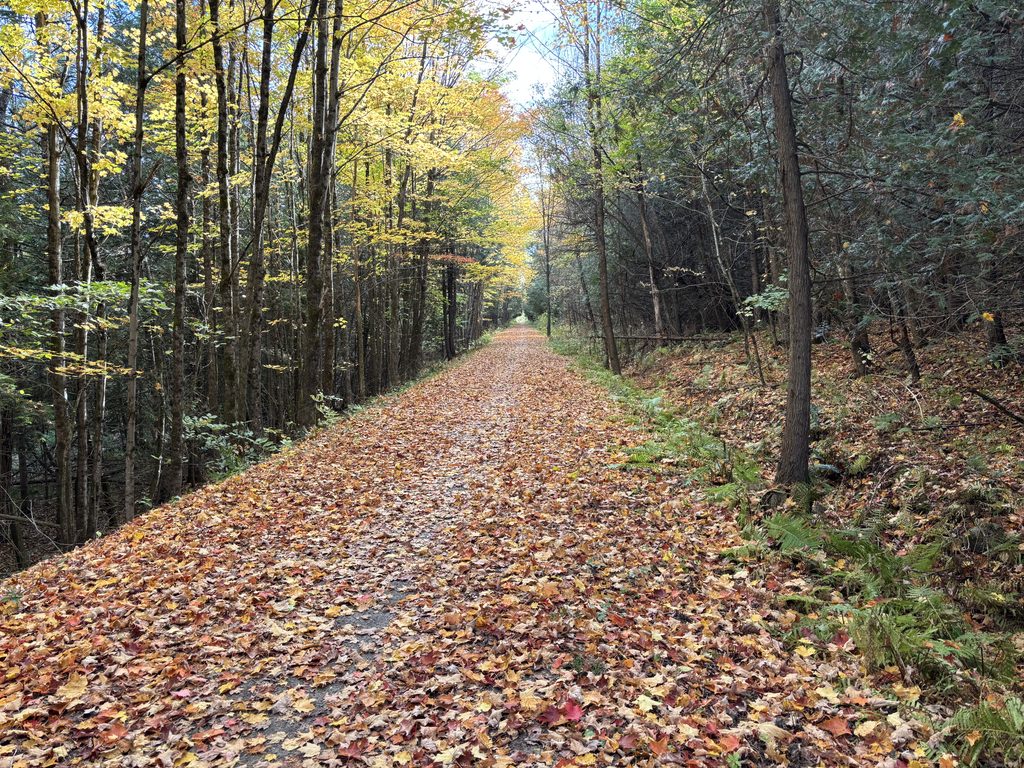
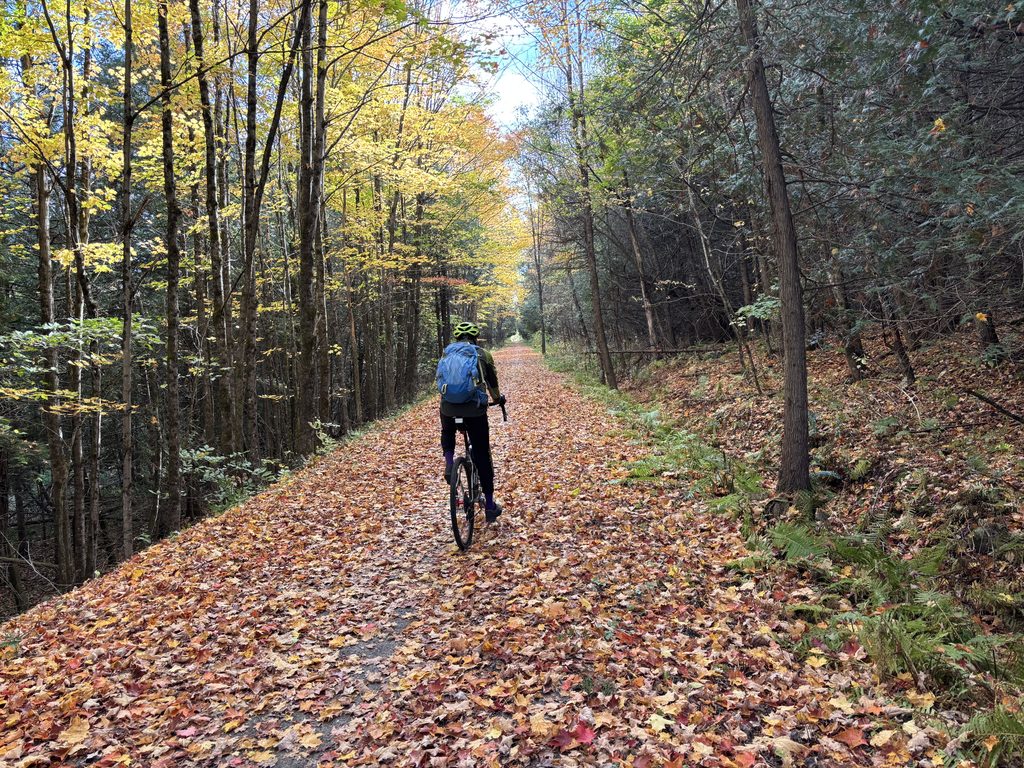
Written by Corinne McKay · Categorized: Uncategorized

Oct 13 2026
Corinne McKay

Upcoming direct client marketing class

Upcoming direct client marketing class

Greetings, Training for Translators subscribers! Next up on the class schedule: Direct client marketing: Learn it, do it! This class runs from October 27-December 1, and includes five live sessions (recordings provided), two co-working sessions, an accountability tracker, and an individual review of one piece of marketing material.

Registration is $245 if you’re a member of Training for Translators Plus, and $275 for everyone else. Topics:

  • Intro to the direct client market; figuring out who needs you and what marketing methods you can stick with
  • E-mail marketing to direct clients
  • LinkedIn: improving your profile and networking 
  • Other marketing methods: client-side events, presentations, how/when to do discovery calls, following up with clients who seem interested but don’t commit 
  • Live question and answer session

I’m excited to demystify direct client marketing, and I hope to see you there! 

Corinne McKay (classes@trainingfortranslators.com) is the founder of Training for Translators, and has been a full-time freelancer since 2002. An ATA-certified French to English translator and Colorado court-certified interpreter, she also holds a Master of Conference Interpreting from Glendon College. For more tips and insights, join the Training for Translators mailing list!
Written by Corinne McKay · Categorized: Uncategorized

Oct 11 2026
Corinne McKay

Travel: Cycling Quebec’s Tomifobia Nature Trail

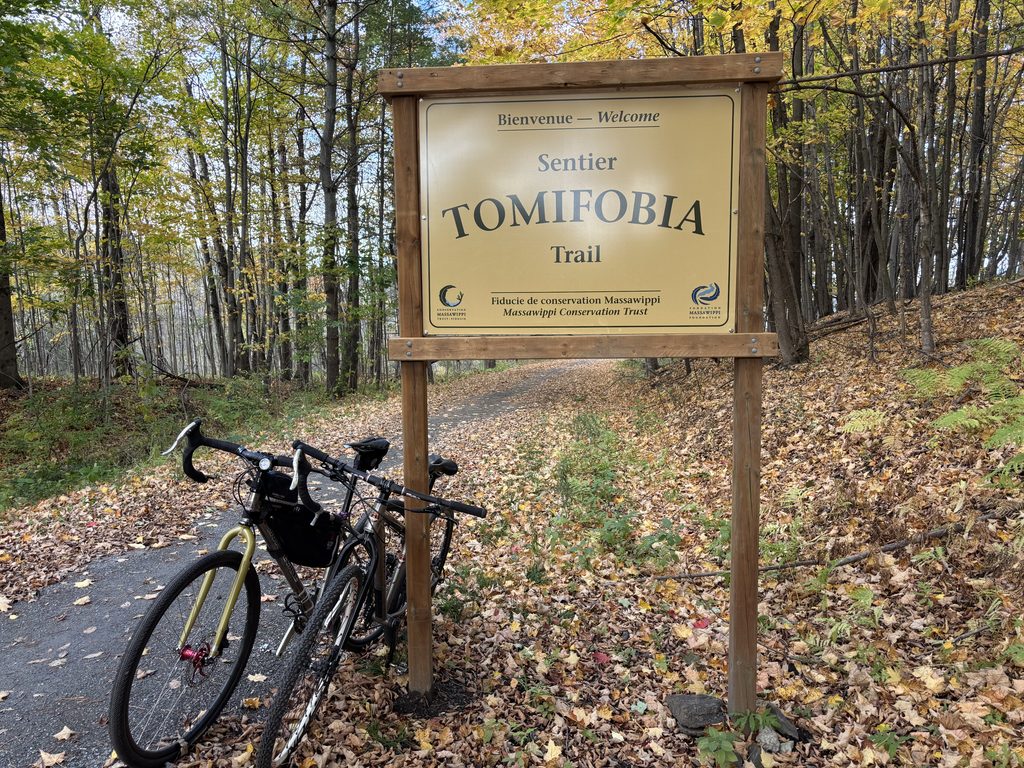
Quebec’s Tomifobia Nature Trail, combined with the Beebe Spur Rail Trail, makes for a fun, beautiful, and mellow half-day bike ride from Newport, Vermont, to Ayer’s Cliff, Quebec. My husband and I recently rode it during peak leaf season and really enjoyed it! The trail itself is about 19 km (11.8 miles) with a very gentle grade, and you can add on a short section (about 1.5 miles) of quiet road riding plus the 4-mile Beebe Spur Rail Trail to make a fun cross-border adventure (bring your passport, whichever end you start from!).

Side note: Tomifobia is not to be confused with the English word tomophobia, or the fear of having surgery. There are apparently a few theories about the etymology of Tomifobia, possibly some version of the Abenaki/Algonquin word for “fish,” or a term for a winding river.

Table of Contents
  • Logistics and bike advice
  • Starting the ride from Newport, Vermont
  • The trail to Ayer’s Cliff

Logistics and bike advice

We started from Newport, Vermont, where you can park for free at North Country Hospital and pick up the Beebe Spur Rail Trail. This runs along the eastern shore of Lake Memphremagog (“great expanse of water” in the Algonquin language) for about four miles, ending at a quiet paved road.

If you’re riding with kids, older people, or anyone who just wants a short and pretty spin on their bike, you could do the eight-mile out and back on the Beebe Spur trail. This would be a totally worthwhile outing!

If you’re Canada-bound, you’ll want to bring your passport. There are places to buy food in Ayer’s Cliff (the end of the Tomifobia trail on the Quebec side), but opening hours and days seemed to vary (more on this below). Always a good idea to bring some backup snacks.

We took our gravel bikes on this ride and they were pretty much perfect. There are no significant hills, so a road bike with decent tires would also work fine. We saw a group of people on e-bikes, and honestly you could do this on a three-speed commuter bike!

Starting the ride from Newport, Vermont

We drove to North Country Hospital in Newport, Vermont and parked there. This sounds a little dubious, but it’s in the official rail trail description. You can pick up the Beebe Spur trail a very short distance from the hospital parking lot, and from there it’s a straight shot along the lake to the end of the bike path. It’s a crushed gravel surface, nice and smooth!

At the end of the trail, there apparently used to be a border crossing, but it’s no longer active. You’ll need to take a right turn onto the (quiet) paved road and ride about 1.5 miles into the town of of Beebe Plain. This is the only part of the ride with any significant hills. At the stop sign in Beebe Plain, look to the left and you’ll see the border crossing!

Once over the border, you have a couple of options for getting to the Tomifobia trail. The most direct is to ride straight down the main road (Rue Principale) and at the intersection of Rue Principale and Rue Woodside, the Tomifobia trail will take off diagonally on the right. We found the main road totally fine to ride on, but you can also ride just past the curling club (a landmark anywhere in Canada!), take a left onto what might be an old railroad bed and make your way through that neighborhood to an unmarked bike path across Rue Junction. This is a little vague because you’re on streets that don’t really have names; we navigated it using our offline mapping app Pocket Earth (iOS only).

If you choose the “weaving through town” option, you’ll take the unmarked bike path behind a bunch of houses, then you’ll come to Rue Principale where the Tomifobia trail starts at a large sign on the other side.

The trail to Ayer’s Cliff

Once on the trail, there’s some pavement, some cracked pavement, and some gravel. You’ll wind past beaver ponds, small farms, and a few very quiet road crossings, until you reach the small town of Ayer’s Cliff, Quebec.

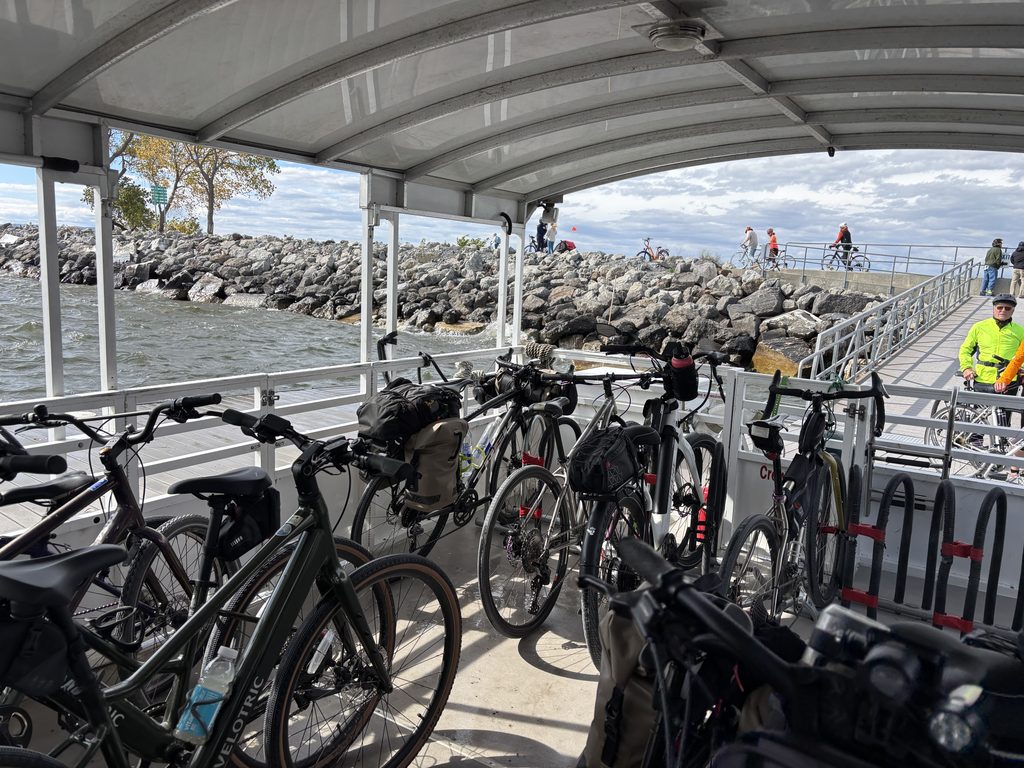
The Tomifobia trail ends here, but you can explore various options for a longer ride, including taking your bike on the ferry across Lake Massiwippi. The Navette Le Wippi has bike racks, and joins up with the Grandes Fourches bike route network on the other side of the lake (runs in summer only).

If Ayer’s Cliff is your turnaround point, you might be ready for a snack. On an autumn weekday, the options in the center of town were pretty slim. Wood’s Snack Bar (right at the main intersection in town) had closed for the season, and the cafe on the main drag was only open on weekends. Fortunately my sister-in-law had clued us in to the coffee shop/snack bar at the local dairy, La Pinte. They’re at 1060 Rue Westmount, about a five-minute bike ride from the center of town.

There (open Monday-Saturday, approximately 9:30 until 4:30 or 5:30) you’ll find excellent coffee, baked treats, and all kinds of dairy products. We split a pint of blueberry yogurt made from local blueberries: ultra yum!

After our lunch break at La Pinte, we reversed the route, spinning back to Beebe Plain, over the border, and then back to Newport. The whole outing took about five hours at a leisurely place (including stopping in Ayer’s Cliff) and was a fun opportunity to do a kind of riding we don’t have in Colorado!

Corinne McKay (classes@trainingfortranslators.com) is the founder of Training for Translators, and has been a full-time freelancer since 2002. An ATA-certified French to English translator and Colorado court-certified interpreter, she also holds a Master of Conference Interpreting from Glendon College. For more tips and insights, join the Training for Translators mailing list!
Written by Corinne McKay · Categorized: Uncategorized

Oct 11 2026
Corinne McKay

Travel: Cycling Burlington, Vermont’s Causeway Bike Trail

Table of Contents
  • Gear tips and general Burlington advice
  • Pick up the trail in Burlington
  • The Colchester Causeway
  • The bike ferry!
  • Apples! The big attraction in South Hero

My husband and I recently traveled to visit family in Vermont, and brought along our gravel bikes. It was the height of leaf season (October 3-11), and Vermont has tons of great bike paths, rail trails, and quiet roads to explore. In our home area (Colorado) we mountain bike almost exclusively, but we took this trip as a chance to try some new two-wheeled adventures, starting with a fun half-day ride on the Burlington/Colchester Causeway Bike Trail. Here’s a map of the entire Island Line Trail, of which the Causeway Trail is a part.

Gear tips and general Burlington advice

If you need to pick up any bike gear or other outdoor items before your ride, Outdoor Gear Exchange at 37 Church Street in Burlington is a great source. We stopped off there for a pair of bike gloves, a spare tube, and some chain lube.

The Church Street area has tons of food options; we’re fans of Muddy Waters coffee at 184 Main Street and the Burlington Bagel Bakery at 93 Church Street. The City Market Co-Op, 82 South Winooski Ave. is a short walk from Church Street and has a full selection of food and drinks. If you’re looking for a place to have a “real meal” after the ride, we enjoyed the Skinny Pancake, a restaurant with mainly crepes but also other things, right by the lake front, 60 Lake Street in Burlington.

Downtown Burlington is pretty compact; for all-day parking options, check out the city’s parking website.

Pick up the trail in Burlington

If you’re looking for a mellow, beautiful bike ride from Burlington, the Causeway Bike Trail is an excellent option. We saw people on pretty much every imaginable type of bike: road bikes, e-bikes, cruisers, maybe a couple of mountain bikes, and lots of gravel bikes! I was glad to have wider gravel tires, but a confident rider could definitely do this on a road bike; just be prepared for some significant crosswinds on the causeway section.

The entire trail is about 14 miles each way (see information about the Island Line Trail here) and it’s easiest to start in Burlington, where the Burlington Greenway trail runs along the very scenic shore of Lake Champlain. We parked near Church Street in downtown Burlington, then rode down the hill on cyclist-friendly Main Street, picking up the bike path at Waterfront Park. Head north and you’re on your way!

The first eight miles of the trail are paved and pretty much flat, with beautiful views across Lake Champlain, to the Adirondack Mountains on the New York side.

The Colchester Causeway

If you’re from a state with little to no water (lookin’ at you, Colorado), things really get fun when you get to Colchester. After winding through a short section of suburban streets (very little traffic), you’re on the gravel-surfaced Colchester Causeway.

If you’re doing this ride on a weekend and you want to avoid the bike and pedestrian traffic on the Burlington Greenway, you could also drive to Colchester and park at Airport Park, where there’s a large parking lot, bathrooms, and a playground.

From Airport Park, follow the signs to the causeway (down a steep-ish hill). Out on the causeway, you’re likely to get some wind, but also amazing views of the Adirondacks to the west and the Green Mountains to the east as you cross the lake. If you’re riding with kids, older people, or anyone not particularly confident on a bike, note that this section of the trail is around four feet wide and totally exposed (no guardrails); it’s in no way dangerous for confident/experienced riders, but something to consider if you have less confident people in your group.

The bike ferry!

The true novelty on this ride is…the bike ferry! At the end of the Colchester Causeway (about 13 miles into the ride if you started from the Burlington waterfront), you’ll reach The Cut, a 200-foot gap in the causeway where boats can cross from one side of Lake Champlain to the other.

My husband mused whether teenagers on BMX bikes ever set up a ramp at night and try to jump this opening, but the better option is to hop aboard the Local Motion bike ferry. Our bikes had never been on a boat, so we were excited to find that it was running on the day we were there.

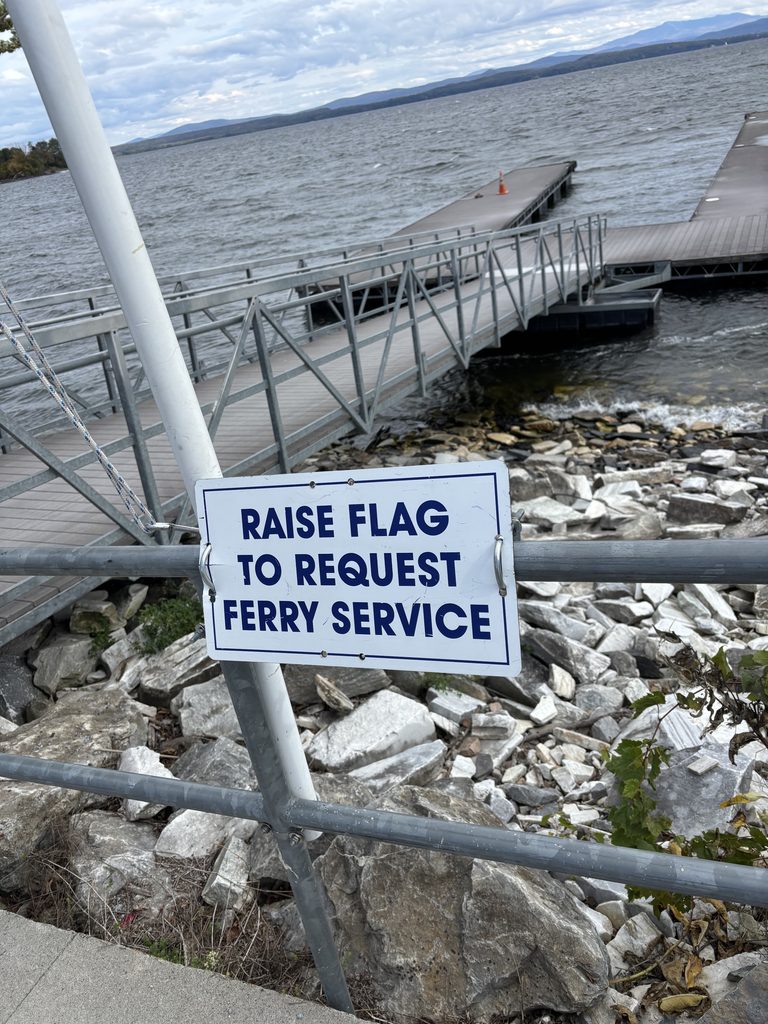
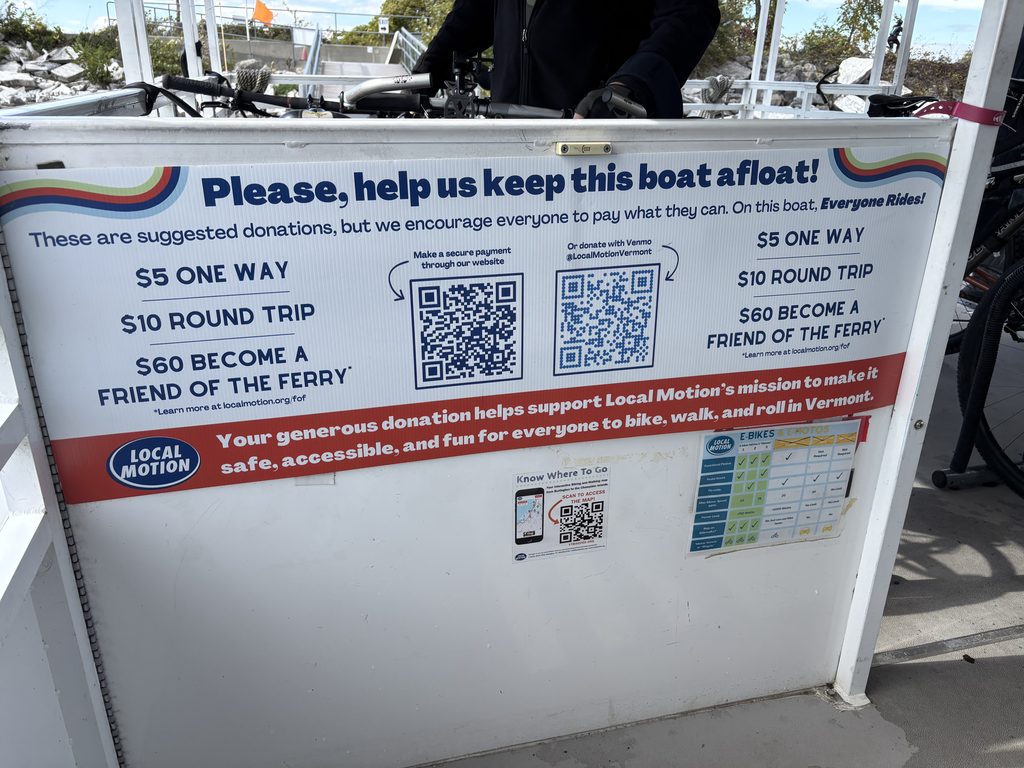
The bike ferry is seasonal and runs only on weekends in spring and fall, so check the schedule before you go. On the Burlington side, there was an attendant who explained the system (suggested donation $5, the ferry takes anyone and anything non-motorized, including pedestrians, bikes, standard e-bikes, and wheelchairs, but not including e-motos). You wait for the incoming passengers to get off, then the crew waves you down to the dock and helps you load your bike.

The crossing takes all of about 90 seconds, but it was still really fun being on a boat for human-powered vehicles only. On the other side, you arrive on South Hero Island, officially known as Grand Isle, the largest island in Lake Champlain.

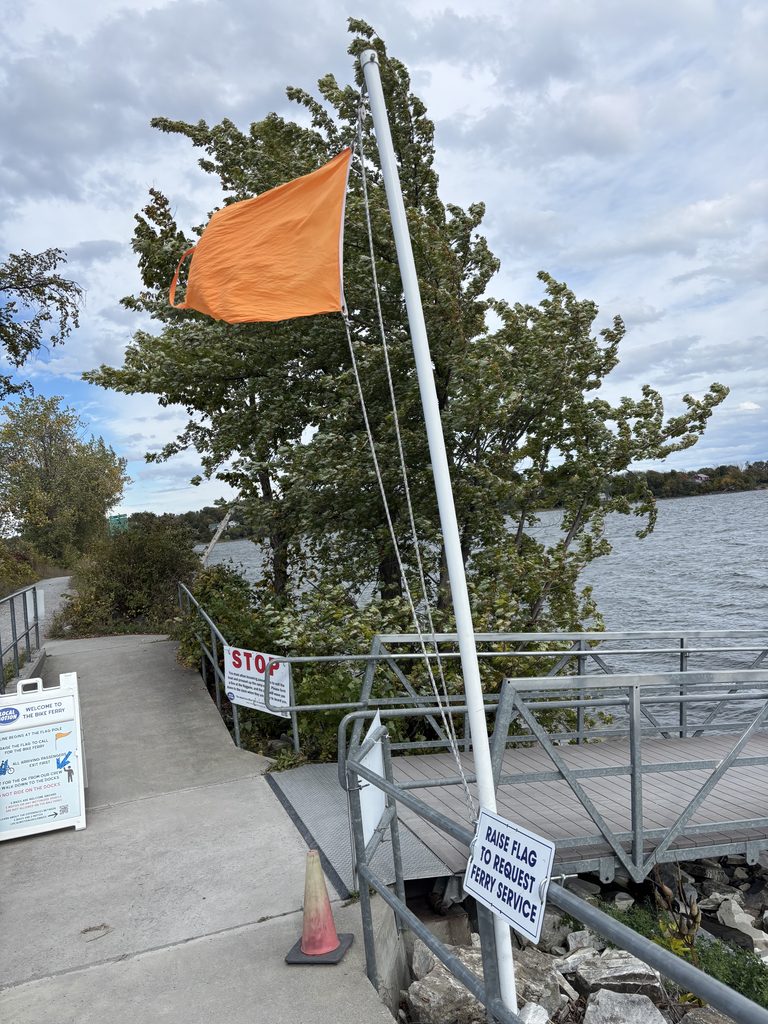
To return to the Burlington side, you raise an orange flag (see photo above) to summon the ferry, then reverse the process (wait for the crew to wave you down).

Apples! The big attraction in South Hero

If you’re just here for the ferry ride (no shame in that!), hang out on the causeway for a bit and then ride back. But if you’re up for another three miles of riding on quiet roads, follow the gravel road from the end of the causeway, hang a right at the paved road (very little traffic), hang a left at the stop sign (still very little traffic) and head down to Hackett’s Orchard, where all things apple await!

We picked up a half-dozen cider donuts (you can get them plain, sugared, or half and half), a hot cider, and some loose apples just to eat. It was a sunny day, New England autumn at its finest, so we sat outside and enjoyed our treats, then cycled back to the ferry.

The whole experience (Burlington to Burlington) took us about five hours including the orchard stop; definitely a day well spent on a human-powered adventure!

Corinne McKay (classes@trainingfortranslators.com) is the founder of Training for Translators, and has been a full-time freelancer since 2002. An ATA-certified French to English translator and Colorado court-certified interpreter, she also holds a Master of Conference Interpreting from Glendon College. For more tips and insights, join the Training for Translators mailing list!
Written by Corinne McKay · Categorized: Uncategorized

Oct 06 2026
Corinne McKay

When part of your business falls off a cliff

Corinne McKay (classes@trainingfortranslators.com) is the founder of Training for Translators, and has been a full-time freelancer since 2002. An ATA-certified French to English translator and Colorado court-certified interpreter, she also holds a Master of Conference Interpreting from Glendon College. For more tips and insights, join the Training for Translators mailing list!
This month, I’m celebrating my 24th freelance-iversary. It goes without saying that things have changed a lot since 2002.

One massive shift: when I started out, the vast majority of freelance translators and interpreters made the vast majority of their income working for a small stable of loyal agency clients. It wasn’t unusual to make 70% of one’s income from two to five agencies, which made our work a lot like a regular job where we set the hours, and to some extent the rates. 

For most of us, those days are gone, for two reasons:

  1. Agencies’ own work is less stable
  2. For translation, agencies are probably offering rates that you can’t live off, especially if that’s for MTPE (machine translation post-editing) 

A big shift: When part of your business falls off a cliff

In the before-times (pre-COVID, pre-ChatGPT), I don’t recall talking to many freelancers who were suddenly dumped by a major client. It definitely happened, but these days it’s happening a lot. I wrote about this phenomenon (Help! I lost my biggest client with no warning!) in July, and I’ve since talked to a freelancer who lost 80% of their income with no warning, and several people who lost more than 25% with no warning. 

In my opinion, the risk that part of your business falls off a cliff is greater than ever. Here’s how this has played out in my own business in the past year and a half:

  • In 2024, I made a good chunk of money interpreting in U.S. immigration court. I really love that work, and it was a pretty long and demanding process to pass the interpreting tests and do the paperwork to obtain the certification. At the time, they paid around $500 per day for in-person work and I was hopeful to start doing at least two assignments per month for them. I’ve gotten zero work from them since February 2025.
  • About a year ago, a good interpreting agency client approached me about a large project, around $30,000 for multiple weeks of on-site interpreting. After some back and forth about the details, I never heard from them again. 
  • Another good interpreting agency client mostly used me for one end client, and it was a big one (also around $30,000 per year). They recently lost that client to AI. 

These situations are specific to my business, but they prove a point: the business world in general is a lot less stable than it used to be. 

The real question: How to handle this new reality?

Your specifics are going to be different, but in a big-picture way, we’re all facing similar situations. I’m going to talk about this in more depth during our Training for Translators Plus “Behind the Business” session on October 22, but here’s my advice:

  • Don’t ignore the writing on the wall. Sometimes, things really do fall off a cliff out of nowhere. This happened to me with one of my first good direct clients. After two or three years of steady work, they hired a half-time marketing employee who also had translation experience, and I was outta there with one e-mail. But it’s more common that the loss of the client is somewhat foretold, you just choose not to see it. For various reasons that I won’t go into because of client confidentiality, I honestly wasn’t that surprised when my interpreting agency client’s end client decided to discontinue live interpreting and switch to AI captions. The advantage: I felt it coming, so I was at least somewhat mentally prepared. 
  • The business savings account: more important than ever. I’ve long championed the importance of a business savings account, so that you’re earning the money today to pay the bills in three months, or six months, not the bills that are due next week. These days, I think you need savings that are proportional to the risk of losing your biggest client. My guideline: one month of savings per 10% of your income that this client represents, and round up. If your biggest client represents 25% of your income, you need three months of savings in case they drop you. 
  • Face the numbers. Data always tells a story, and sometimes it’s a different story than what exists in our heads. That goes both ways: sometimes we tell ourselves “it’s fine” when it’s actually a train wreck, and sometimes we tell ourselves “my business is circling the drain” when it’s really not. Enter: numbers, and two questions. 1) Are you in financial danger? 2) Are you still on track to meet your income goals? In my case, last year was my highest-earning year in 20+ years of freelancing ($145K) and I rapidly acknowledged that I worked too hard for that money. My numbers this year are definitely down, due to the interpreting client that switched to AI, and a large, one-time translation project last year that didn’t happen this year. By this time last year, I had earned $118K after paying my subcontractors (primarily T4T guest instructors) and as of today I’ve earned $95K; the drop is roughly proportional to what I earned from the interpreting client that switched to AI. And yet, I don’t feel financially strained and I’m on track to meet the minimum income goal ($125K) that I’ve set for myself. 
  • Identify what is working. When you dig into your numbers, is it all bad news, or are some categories, or some types of clients, doing well? For me, legal interpreting is up. I’ve gotten remote work from a number of new states, and I just did an in-person trial in another state. Content writing for translation and interpreting companies is way, way up, and I’ve gotten a couple of really interesting new direct clients for both interpreting and translation. Things are far from bleak, but I need to follow my own advice and Always Be Marketing. 

A few takeaways 

If your business feels like a bit of a rollercoaster these days, here’s what I’d suggest:

  • Back to Boring Basics: If your main challenge is that you need more work, you should be marketing every second that you don’t have paying work. This is totally un-glamorous advice, but in my experience it’s critical. 
  • Follow up, follow up, follow up. Lately, when I talk to language folks who are finding good work, it’s almost always after more than two follow-ups. Sometimes it’s after eight follow-ups (no kidding, actual example). My own new policy: once a potential client has expressed an interest in working with me, I follow up with them until I get a yes or a no. I do it politely, and I never demand a response. I never say, “I’d appreciate you getting back to me either way.” I say something like, “In case my previous message got buried, I just wanted to check in and see where you’re at on the project we talked about.” 
  • Avoid emotional waffling about whether freelancing is still for you. This is a mindset tip, but I think it’s important. About a year ago, I made a decision: unless something truly amazing falls into my lap, I’m sticking with freelancing for the long haul. I’ve also talked to people who are quitting translation and interpreting to either go back to school or take an in-house job in an unrelated field: radiology technician, government report writer, paralegal. You don’t need my approval for either of those things, but you do need to avoid expending emotional energy on whether you’re sticking with freelancing or not. Freelancing, especially at a high income level, is hard enough when you’re fully committed to it. It’s almost impossible if you’re constantly thinking, “If I had started applying for in-house jobs six months ago, I wouldn’t be in this position.” In, out, it’s your decision, but it needs to be an intentional decision. 

I hope these tips are helpful!

If you’d like more T4T in your life (accountability, support, training) without a huge financial commitment ($9/month, cancel any time), you should think about joining Training for Translators Plus. 

You’ll get a monthly goal-setting exercise, monthly training opportunities (this month there are actually three things: a recorded training on marketing to direct clients, a live Behind the Business session, and a co-working session), and early access/discounts on T4T offerings!

Written by Corinne McKay · Categorized: Uncategorized

  • Page 1
  • Page 2
  • Page 3
  • Interim pages omitted …
  • Page 245
  • Go to Next Page »

Primary Sidebar

Subscribe to the Training for Translators mailing list!
Getting Started as a Freelance Interpreter: Available now in print and electronic editions

Learn from our blog:

  • Focus on the clients who can afford you
  • Upcoming direct client marketing class
  • Travel: Cycling Quebec’s Tomifobia Nature Trail
  • Travel: Cycling Burlington, Vermont’s Causeway Bike Trail
  • When part of your business falls off a cliff
  • Upcoming free webinar: Honest brand communications through purpose, positioning, and personality
  • Training for Translators Plus is here!
  • Reader question roundup: Who’s doing well right how, how to prepare for the ATA exam, and more!

Search the Training for Translators blog

Copyright © 2026 · Training For Translators · Log in

This website uses cookies to improve your experience. We'll assume you're OK with this, but you can opt-out if you wish. To view this website's privacy policy, click About>Privacy Policy. Accept Read More
Privacy & Cookies Policy

Privacy Overview

This website uses cookies to improve your experience while you navigate through the website. Out of these, the cookies that are categorized as necessary are stored on your browser as they are essential for the working of basic functionalities of the website. We also use third-party cookies that help us analyze and understand how you use this website. These cookies will be stored in your browser only with your consent. You also have the option to opt-out of these cookies. But opting out of some of these cookies may affect your browsing experience.
Necessary
Always Enabled
Necessary cookies are absolutely essential for the website to function properly. This category only includes cookies that ensures basic functionalities and security features of the website. These cookies do not store any personal information.
Non-necessary
Any cookies that may not be particularly necessary for the website to function and is used specifically to collect user personal data via analytics, ads, other embedded contents are termed as non-necessary cookies. It is mandatory to procure user consent prior to running these cookies on your website.
SAVE & ACCEPT